Ninajirachi at Franklin Music Hall: Show Review
Bailey Nicholas
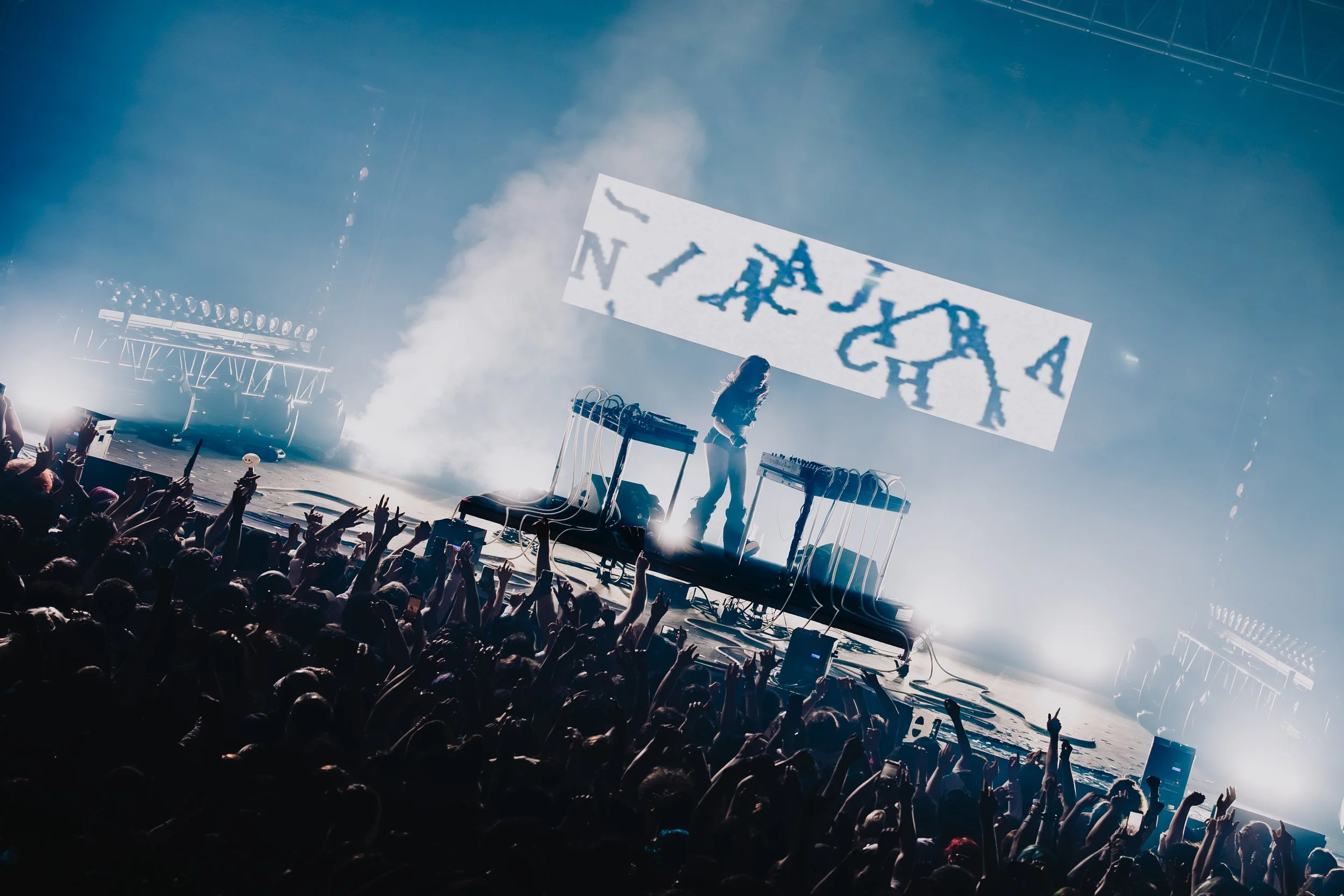
After a cancelled show due to a venue scheduling error in February of this year, Australia's Ninajirachi made it back to Philadelphia on October 2nd for a sold-out concert at Franklin Music Hall as part of her “I Love My Computer and It Loves Me” tour. A line of fans wrapped around the converted tire warehouse as rain poured down thirty minutes before doors opened, but the rain did not wipe away the energy and excitement of the attendees. Everyone remained in high-spirts, clad in fluffy boots, neon hair, and sprout clips, a popular accessory in rave culture. Similar to the entrance line, the merch line looped throughout the interior of the concert hall and many fans were changing into their Ninajirachi merch immediately upon purchase.
Australian pop-duo 2charm started off the night with a high-energy, heavily physical performance full of synchronized dance moves, matching the electric enthusiasm of the crowd. Electroclash pop-duo MGNA Crrrta followed with a similarly eccentric show complete with trippy visuals and a performance of their recent single “Deadtome”, handing a bracelet to a crowd member mid-show and building anticipation for the headlining act.
Bailey Nicholas
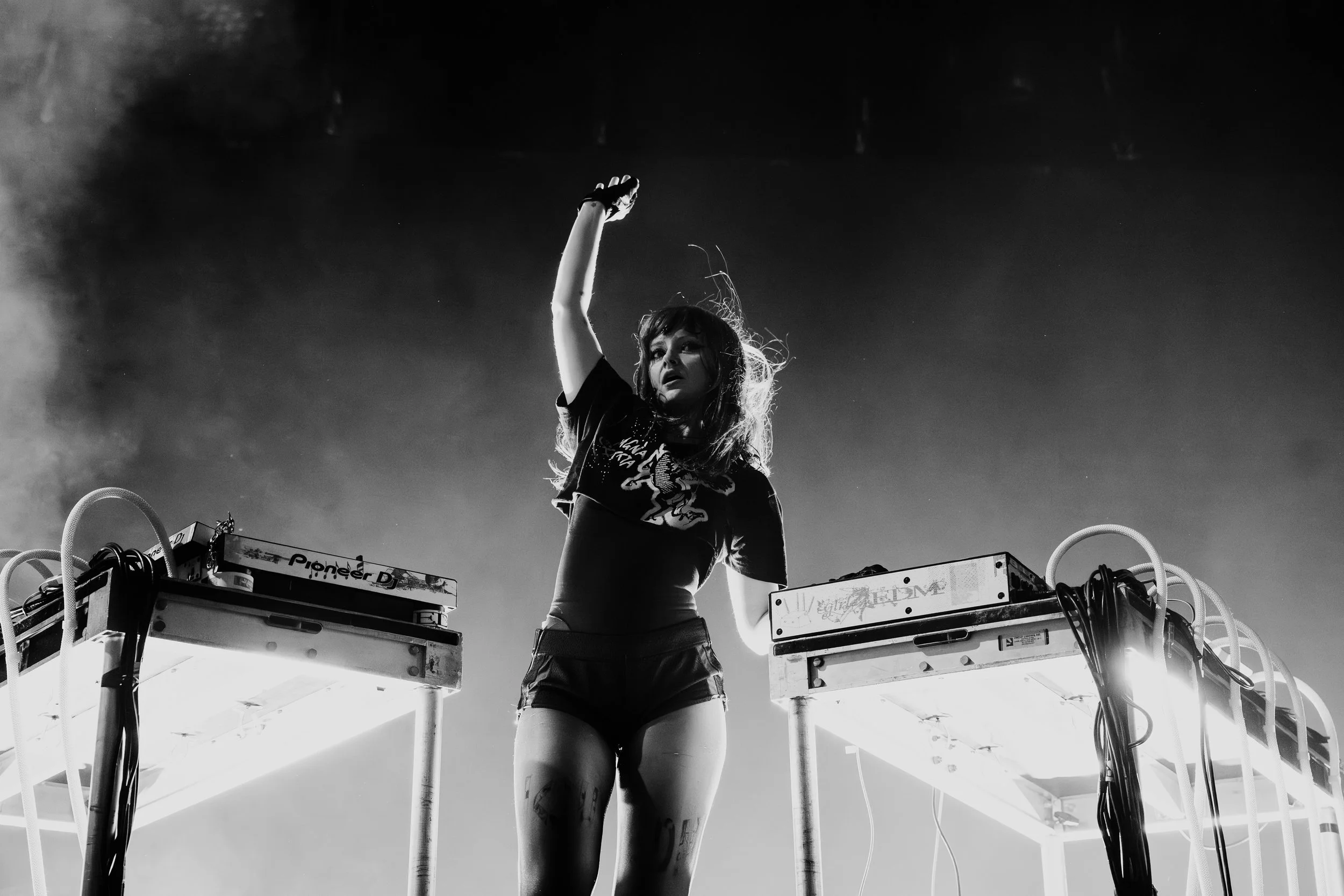
Ninajirachi’s set began by building excitement through a buzzing bass and black and white visuals while the audience shouted Ninajirachi’s name, erupting into cheers as the notorious opening beat of “girl EDM” began blasting through the speakers. The crowd matched the high energy of the music, jumping to the beat as “girl EDM” transitioned into the award-winning album I Love My Computer’s opening track, “London Song”, and blue confetti fell upon their shoulders. As a long time Ninajirachi listener, I honestly found myself experiencing FOMO; I wished I could duplicate myself in that moment, having one version of myself photographing the show and taking notes for this review, and another in the middle of the audience, shouting lyrics at the top of my lungs and dancing along with everyone. Of the numerous concerts I have attended over the past two decades, Ninajirachi’s Philadelphia show had one of the most engaged, high-energy audiences I have seen in a long time. As the show continued, Ninajirachi played crowd favorites like “Delete” and “iPod Touch”, as well as Dylan Brady of 100 gecs’s remix of “CSIRAC”, which was released that same day. Ninajirachi wrapped up the show with “Fuck My Computer” before leaving the stage, but the audience did not want the night to be over. The crowd continued to yell her name, cheer, and even recite the famous “Eagles” chant of the Philadelphia Eagles, refusing to let the show end. Ninajirachi returned to the stage for an encore full of remixes as the audience carried out a final rush of excitement, jumping along as the performance reached an end.
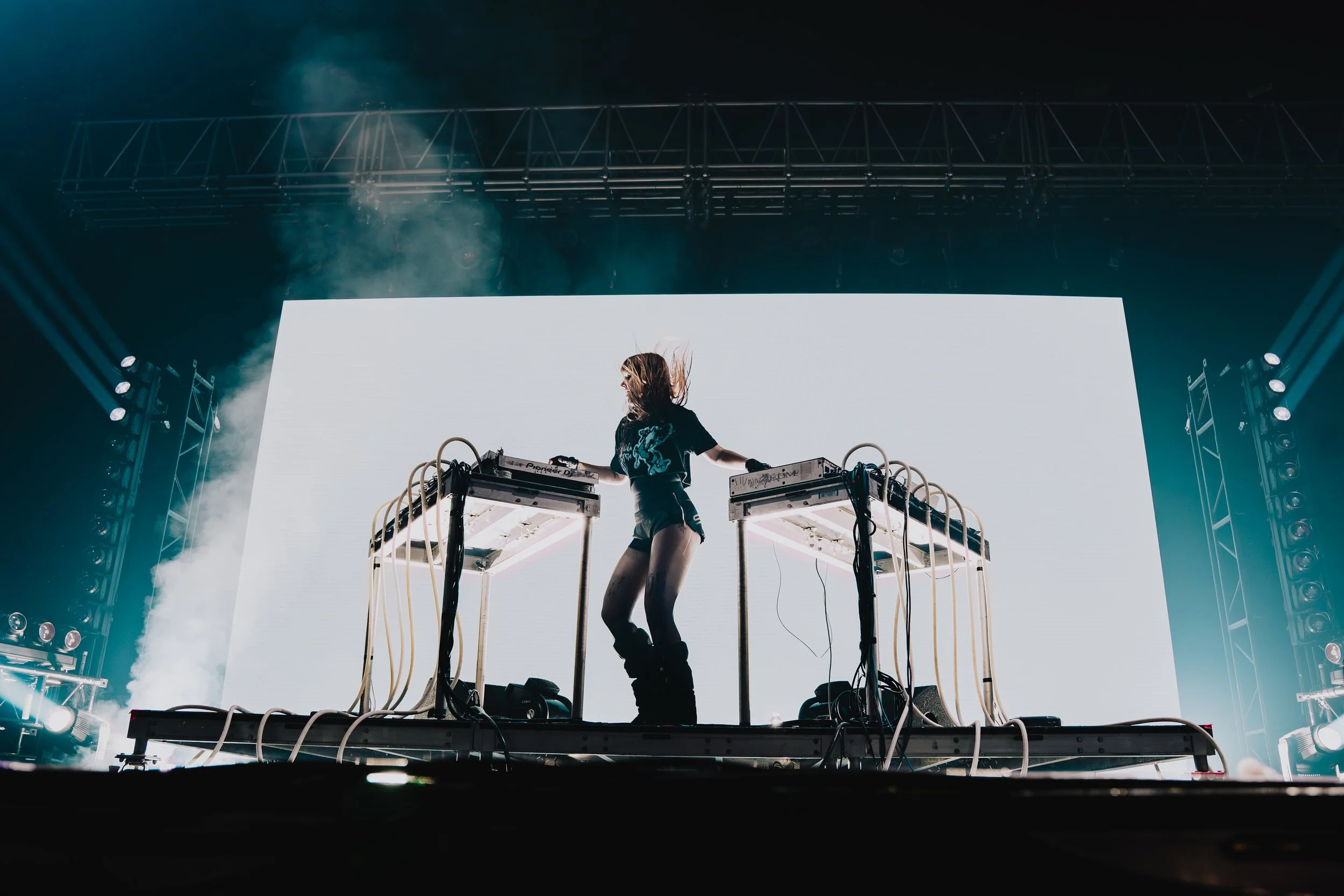
What stood out the most – besides the passionate enthusiasm of the crowd and the hypnotic, high-energy nature of Ninajirachi’s music – were the visuals. Due to the dynamism of EDM music, it can be challenging for artists to properly complement the music with intriguing visuals; this was far from the case for Ninajirachi. It’s difficult to put the neon wistfulness of the visuals into words; think of a curated compilation of late 2000s to early 2010s internet nostalgia TikToks mixed with artistic, technology-inspired graphics. As someone who grew up heavily involved in internet and video game culture during this time period, I found myself entranced, yearning for the childhood internet friends I played Minecraft with and my teal fifth generation iPod Touch. There are no other visuals that could have complemented Ninajirachi’s music, energy, and audience better.
Bailey Nicholas
Ninajirachi’s Philadelphia show demonstrates the resurgence of EDM and electronic music culture among a Gen Z audience, building on the nostalgia of the first generation to be raised alongside the internet and have a childhood featuring the iconic iPod Touch. This generation yearns for their childhood experience with electronics alongside a sense of community, and Ninajirachi’s music falls at this intersection. Anyone who grew up playing online video games, hanging out on early versions of social media, or listening to dubstep during its peak, can find a piece of themselves in Ninajirachi’s music and community.